THIS PAGE IS INTENDED FOR UK PATIENTS WHO HAVE BEEN PRESCRIBED CETRAXAL® (CIPROFLOXACIN) OR CETRAXAL PLUS® (CIPROFLOXACIN/FLUOCINOLONE).
Adverse event reporting can be found at the bottom of the page.

THIS PAGE IS INTENDED FOR UK PATIENTS WHO HAVE BEEN PRESCRIBED CETRAXAL® (CIPROFLOXACIN) OR CETRAXAL PLUS® (CIPROFLOXACIN/FLUOCINOLONE).
Adverse event reporting can be found at the bottom of the page.
What is AOE?
AOE is an infection of the external ear canal that has lasted a short period of time (less than 6 weeks).1
It is a common condition; affecting up to 10% of the population at some point in their lives2 and, although it can affect people of any age, it is more common in children.
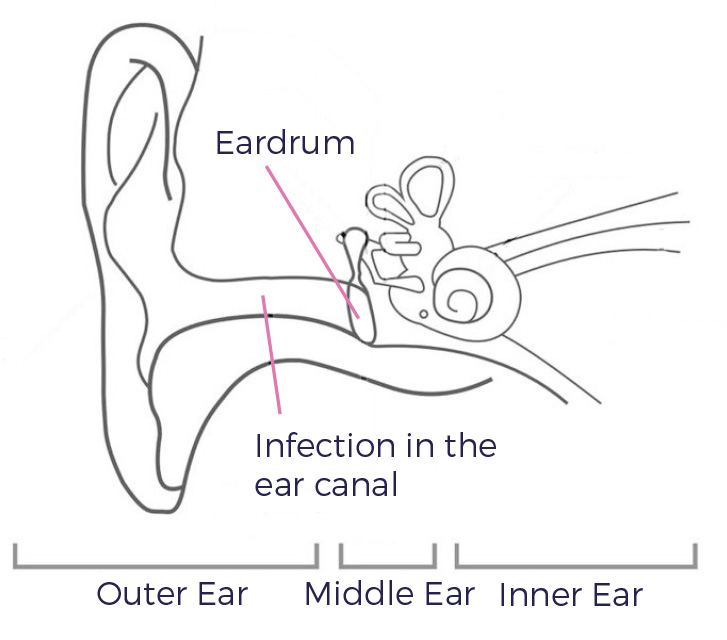
Causes1
In most cases, AOE is caused by infection by bacteria and there are a number of risk factors which make infection more likely:
Symptoms1
Treatment
There are a number of different treatment options for AOE. Your GP or pharmacist will be able to advise you on the most suitable after examining your ear/s.
Painkillers will help ease any pain associated with AOE but your GP or pharmacist might also prescribe a spray or drops which are administered directly into the affected ear/s.
These sprays/drops may be antibiotic or anti-fungal with the aim of killing the bacteria or fungus causing the infection. Antibiotic spray/drops may also contain a steroid to help reduce inflammation.
There are a number of things that you can also try yourself to aid recovery or prevent infection in the first place.1, 3
Your ears should be kept clean and dry. Avoid getting soap or shampoo in your ears and avoid using cotton buds to clean your ears.
Placing a warm, but not wet, flannel against your ear may help ease any pain associated with AOE and a small amount of cotton wool can be used if there is any discharge.
Skin conditions, such as eczema, should be treated appropriately to help prevent AOE.
References
1. NICE. Clinical Knowledge Summary: Otitis Externa. Available at: https://cks.nice.org.uk/topics/otitis-externa/ [Accessed April 2025]
2. Rosenfeld M et al. Clinical practice guideline: acute otitis externa Otolaryngology Head Neck Surg 2014; vol 150
3. Bupa. Outer Ear Infection. Available at: https://www.bupa.co.uk/health-information/ears-nose-throat/outer-ear-infection [Accessed April 2025]
Reporting of Side Effects
If you get any side effects, talk to your doctor, pharmacist or nurse. This includes any possible side effects not listed
in the product’s package leaflet. You can also report side effects directly via the Yellow Card Scheme at:
www.mhra.gov.uk/yellowcard
By reporting side effects, you can help provide more information on the safety of this medicine.
CTX1010385J3_JUN2025
